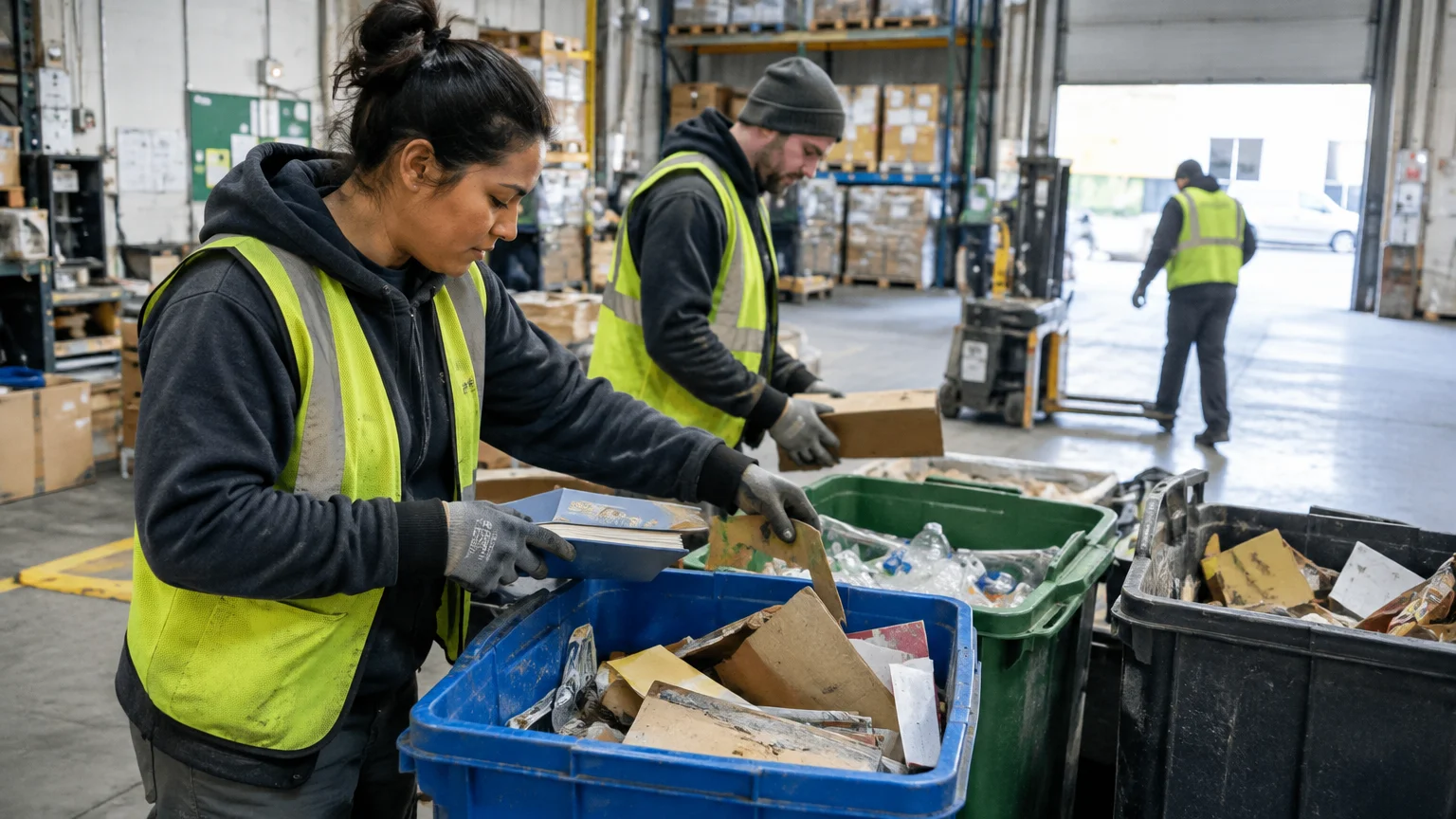
Business recycling solutions give warehouse teams a clear way to sort useful materials from waste. A simple plan can reduce clutter, keep paths clear, and help staff work safely. Teams can separate cardboard, metal, and pallets, then arrange commercial junk removal for bulky items they cannot manage in-house.
Table of Contents
- What are business recycling solutions for warehouses?
- Why should warehouses create a recycling plan?
- How can a warehouse identify recyclable materials?
- How should businesses set up warehouse recycling areas?
- How can teams prepare shelving, equipment, and bulk debris?
- When should a warehouse use a commercial junk removal service?
- How can businesses maintain an effective recycling program?
- Frequently Asked Questions
What are business recycling solutions for warehouses?
Business recycling solutions are the steps a company takes to collect and sort items for reuse or recycling. In a warehouse, these items may include cardboard, clean metal, some plastics, and sound pallets. A useful plan also explains what to do with large items that do not fit in regular recycling bins.
How recycling fits into warehouse cleanup
Warehouse cleanup can uncover many kinds of materials. These may include packing waste, old shelving, broken furniture, damaged equipment, and leftover stock. Sorting items before removal helps staff see what may be reused, what a local recycling service accepts, and what needs another path. It also helps keep useful materials out of mixed debris.
The plan should fit the building and the work done there. A small storage room may need one marked spot for cardboard and a safe place for unwanted items. A large warehouse may need several collection points, clear paths, and a set plan for full containers. The goal is to make the right choice easy for the team.
For Palm Coast warehouse owners, this planning can make a cleanout easier to manage. Palm Coast Florida Junk Removal can help local businesses plan junk removal when shelving, equipment, or mixed debris is too large for their usual process. Staff should still use the recycling plan to sort items before a collection is arranged.
Which materials can typically be recovered
Cardboard, clean scrap metal, some plastics, and reusable pallets may be accepted by recycling or reuse programs. The rules can vary by service and location, including in Palm Coast. Wet, dirty, mixed, or damaged items may not be accepted, so check local rules before setting them aside.
A recycling plan does not mean every item can be recycled. It gives staff a simple way to find possible options and keep useful materials apart when they can. This makes cleanup easier to manage and gives workers a clear next step for each item.
Why should warehouses create a recycling plan?
A warehouse recycling plan gives staff one shared way to sort materials and keep work areas neat. It can reduce mixed piles, cut down on handling the same items again, and help teams decide what to keep, reuse, recycle, or remove. The best plan fits the work people already do.
Reducing disposal and material-handling challenges
Without a plan, items may build up in aisles, near loading areas, or beside workstations. Staff may move the same pile more than once, and recycling can get mixed with waste. A simple system shows where each item goes and who checks the collection area.
The plan can help managers get ready for a large cleanout, too. Before work starts, they can note items that need special care, clear access, and decide what should stay on site. This can reduce last-minute changes and help daily work continue.
For example, a business that replaces old shelving can keep sound sections apart from bent or broken ones. It can also sort cardboard packaging, metal parts, and loose debris into separate groups. These small steps help each load reach the right next stop.
Supporting workplace organization and sustainability goals
A clear recycling area can help make a warehouse easier to walk through and work in. Staff are more likely to sort items well when bins are easy to find and labels use plain words. Managers can explain what the business hopes to recover and what should not go in each bin.
Recycling is one part of a responsible cleanup. First, a business can ask whether an item is still useful, can be fixed, or can be given to someone else. Items that are unsafe, broken, or not accepted by a local program may need another plan.
A useful plan puts safety and clear paths first. It should not make workers carry heavy items farther than needed or stack things where they could fall. Palm Coast Florida Junk Removal works with businesses that need help removing unwanted warehouse items as part of a cleanup.
How can a warehouse identify recyclable materials?
A warehouse can sort materials by checking what each item is made of, whether it is clean and usable, and what local services accept. Staff should not assume that every item with a familiar label belongs in a recycling bin. If the rules are not clear, ask the local provider or waste service.
Sorting cardboard, metals, plastics, and pallets
Start with common materials that are easy to spot. Keep clean, dry cardboard away from general debris. Set aside metal parts only when they are safe to handle, and check which types of plastic a local program accepts. Keep pallets that can be reused apart from broken or unsafe ones.
- Cardboard: Keep it dry and free of food, plastic wrap, and other waste.
- Metal: Separate clean, safe pieces from sharp or mixed materials.
- Plastic: Check local rules instead of judging by how it looks.
- Pallets: Keep sound pallets apart from damaged ones that need removal.
- Equipment and furniture: Decide if each item can be reused, fixed, recycled, or removed.
These groups are a starting point, not a full list. A warehouse may also have packing materials, old office furniture, shelving, and appliances. Some items have parts or materials that need a separate route. Staff should not take equipment apart unless they are trained and can do the work safely.
Checking local rules and material acceptance requirements
Local programs and private services may have different recycling rules. Before a cleanup, a manager should check which materials are accepted, how to prepare them, and whether items need to stay apart. They should also ask what to do with items that are dirty, mixed, or too large for a regular collection point.
This check can prevent a pile from being marked as recyclable when no local service will take it. It can also help teams avoid loading materials in a way that slows the work. Keep the instructions where staff can see them, and update them if the provider or program changes its rules.
How should businesses set up warehouse recycling areas?
Businesses should place recycling areas where staff can reach them safely without blocking work or vehicle paths. Each area needs clear signs, the right containers, and enough space for sorting. The setup should match the warehouse’s daily movement, not just one cleanup.
Choosing collection points and containers
When space allows, place collection points near the tasks that create the materials. A packing area may need a spot for clean cardboard, while a maintenance area may need a separate container for approved scrap metal. Keep materials apart whenever the local program asks for it.
Use clear names on signs and add simple examples when they help. A sign should say what belongs in a container and what must stay out. Avoid vague labels that leave staff guessing. Make sure containers are strong enough for the items they will hold.
The setup does not need to be hard to use. A small warehouse may need only a few marked collection points. A larger site may need a sorting area with separate spaces. Staff should be able to see the layout and understand it before moving materials.
Keeping traffic lanes and work areas clear
Keep recycling containers, loose materials, and large items out of aisles, exits, loading areas, and equipment paths. Workers should not have to go around a pile to reach their work areas. Clear paths matter during normal work and are even more important during a large cleanout.
Managers should plan where full containers will go and how staff will move them. Do not stack items where they could fall or block safety equipment. If a collection area gets crowded, pause sorting and make room instead of letting materials spread into active work areas.
A short walk-through can find problems before a project starts. Check the path from each collection point to the exit or loading area. If large shelving or equipment needs to move, plan its route first and keep workers away from unsafe lifting or moving tasks.
How can teams prepare shelving, equipment, and bulk debris?
Teams can prepare large warehouse items by sorting them, clearing safe access, and finding anything that needs special care. They should keep reusable items apart from recycling and general debris before arranging removal. Workers should not move heavy or awkward loads without the right training and equipment.
Separating reusable items from recycling and disposal
Mark items the business plans to keep or reuse before cleanup starts. Keep them away from materials meant for recycling or removal. A simple label or marked area can stop a useful shelf, pallet, or piece of equipment from being taken by mistake.
Next, sort recyclable materials by local rules. Keep mixed debris apart when possible. For broken furniture, old appliances, or damaged equipment, check the right local options instead of adding them to a general recycling pile.
The same steps can help with questions about how to dispose of furniture or get rid of a fridge. Large appliances and furniture may need a separate collection plan. Check local rules and do not leave large items in shared or public areas without permission.
Handling bulky or awkward materials safely
Before moving shelving or equipment, check that it is steady and safe to handle. Remove loose items from shelves only when it is safe. Do not cut, take apart, or disconnect equipment unless workers have the right training and the task is safe.
For heavy or awkward items, a trained crew may be safer. Keep people away from the path, protect nearby work areas, and make sure the exit route is open. If staff cannot move an item safely with the tools they have, stop and make another plan.
This also applies to broken furniture, bulk debris, and large piles of pallets. Safe work matters more than speed. A manager should tell the removal crew what materials are on site and explain any limits on access before work begins.
When should a warehouse use a commercial junk removal service?
A warehouse should consider commercial junk removal when the amount, size, or type of unwanted material is more than staff can manage safely. A service may help remove large shelving, equipment, furniture, pallets, and mixed debris. Businesses should still sort items first when it is safe and local rules allow.
Recognizing when materials exceed in-house capacity
Signs include piles that block work areas, equipment that staff cannot move safely, or a cleanout that needs more space and handling than the team can provide. A business may also need help when clearing an office or warehouse before a move, repair project, or change in use.
The need can be clear when several large items must leave at once. Old desks, broken furniture, shelving, and unwanted appliances can take up useful floor space. A commercial crew can help with collection and hauling while the business marks which items should go.
When arranging service, describe the materials and site conditions. Useful details include where items are stored, how workers can reach them, and whether loading areas or paths have limits. This helps the removal plan fit the property and its daily work.
Planning removal around operations and access needs
Choose a time when the crew can reach the items without disrupting key work. Tell staff which areas will be cleared and which items must stay. If the warehouse has shared entrances, loading rules, or restricted work zones, explain them before the collection.
Keep sorted materials apart and mark items for removal. Clear the route to the items, but do not ask staff to move anything they cannot handle safely. A manager should be ready to confirm what goes and answer questions about the site.
For businesses and nearby areas, Palm Coast Florida Junk Removal can discuss commercial junk removal for warehouse cleanouts and large items. The service should fit the business’s cleanup plan and the site’s access needs. Clear instructions help the crew remove the right items while useful materials stay separate.
How can businesses maintain an effective recycling program?
Businesses can keep a recycling program working by giving staff clear roles, keeping instructions easy to see, and checking how materials are sorted. The plan should change when work, local rules, or the materials handled by the warehouse change. Regular checks can stop old habits from weakening the system.
Assigning responsibilities and reviewing sorting practices
Choose someone to check collection areas and share updates with staff. Workers should know where materials go, what must stay out, and who to ask when an item is unclear. Keep the guidance short and useful so people can follow it during normal work.
Managers can check the areas during regular walk-throughs. Look for mixed materials, full containers, blocked paths, and signs that are hard to understand. When a problem appears, fix its cause. This may mean moving a container, changing a sign, or explaining a rule again.
New staff should learn the system as part of their site training. A short talk can cover material groups, safe handling, and how to report a large item. Clear training helps keep the plan steady across work shifts.
Tracking material flows and adjusting the plan
A simple record can show what leaves the warehouse and where it goes. Teams do not need a complex system to find common problems. They can note mixed loads, items local providers reject, and areas where containers fill too fast.
Use what you learn to improve the setup. If cardboard often goes in the wrong container, make the sign clearer or move the collection point. If equipment keeps piling up, plan a separate cleanout instead of letting it take up active work space.
Key takeaways
- Sort materials before they mix with general debris.
- Check local rules before calling an item recyclable.
- Keep containers and large items out of work and traffic paths.
- Get trained help when items are too heavy or awkward to move safely.
- Review the plan when warehouse needs or local rules change.
Conclusion
A useful warehouse recycling program starts with clear sorting rules and safe collection areas. It keeps reusable items, recyclable materials, and unwanted debris apart before cleanup begins. When shelving, equipment, or mixed materials are too much for the team to manage, planned commercial removal can help keep the warehouse orderly.
Contact us at Palm Coast Florida Junk Removal to discuss commercial removal for bulky items and unwanted debris.
Frequently Asked Questions
What materials can a warehouse recycle?
Warehouses may be able to recycle clean cardboard, some plastics, scrap metal, and sound pallets. What a program accepts depends on local rules and the provider. Check requirements before sorting materials, especially when items are mixed, dirty, damaged, or unusually large.
How should a business get rid of old furniture?
First, decide whether the furniture can stay, be reused, or be passed on. Keep it apart from recycling and general debris. For broken or large pieces, check local options or arrange commercial junk removal. Staff should not lift furniture they cannot move safely.
How can companies handle a large warehouse cleanout?
Companies can start by marking what stays, then sorting materials by type and removal needs. Keep paths clear, check local recycling rules, and plan access for any collection crew. A commercial junk removal service may help with large items and debris beyond the team’s safe capacity.
How should a business dispose of a fridge or other appliance?
Businesses should check local rules and ask the right waste or recycling provider how to handle the appliance. Some items need a separate collection process. Keep the appliance in a safe place, and do not disconnect or take it apart unless a trained person can do so safely.
What should a warehouse recycling plan include?
A useful plan names the materials staff should separate, shows where each type goes, and explains who checks the collection areas. It should also cover safe access, large items, and how to confirm local acceptance rules. Review the plan when warehouse work or provider rules change.
If you are not sure what you are dealing with, it is worth having someone look at it before it turns into a bigger job. Get in touch with Palm Coast Florida Junk Removal today and we will tell you where you stand.